Good welding is not simply the act of joining two pieces of metal. It requires selecting the rightprocess for the right material, maintaining consistent parameters from start to finish, and understanding that every defect in a weld — whether visible or not — carries consequences for the safety and service life of the component. This is the standard we hold to, whether the work is new production or the repair of components already in service.
At Laser Indonesia, our welding work covers a broad spectrum of materials — from structural steel SS400 through to tool steels for mould applications, from aluminium alloys to precision machine components requiring repair. We operate two distinct capability streams: conventional arc welding, and laser welding. Both are carried out by an experienced team, the majority of whom hold MIGAS certification.
Conventional Welding — Materials, Processes, and Capability
Our conventional welding work covers a wide range of materials and levels of complexity. Process selection is always matched to the specific requirements of each job.
Materials We Work With
From low-carbon structural steel SS400 requiring precision for load-bearing components, to stainless steel for applications demanding corrosion resistance. We also work with aluminium alloys across multiple series — including duralumin — and tool steels including SKD61, SKD11, and SS136 for mould repair and industrial component work.
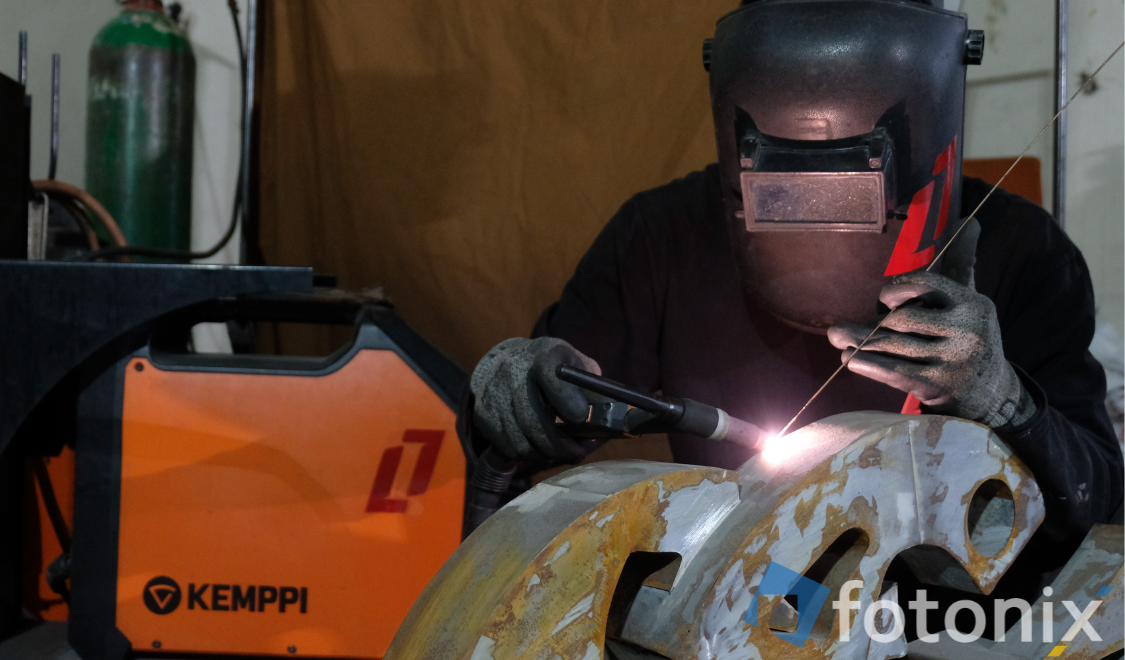
TIG Welding — Kemppi MasterTIG T180
For precision joints, thin material, or where the visual quality of the weld is a formal requirement. The stable arc and precise heat input control of the Kemppi MasterTIG T180 produces clean weld beads with minimal distortion — important for heat-sensitive materials and work requiring a tidy finish.
MIG/MAG Welding — Kemppi FastMig 350
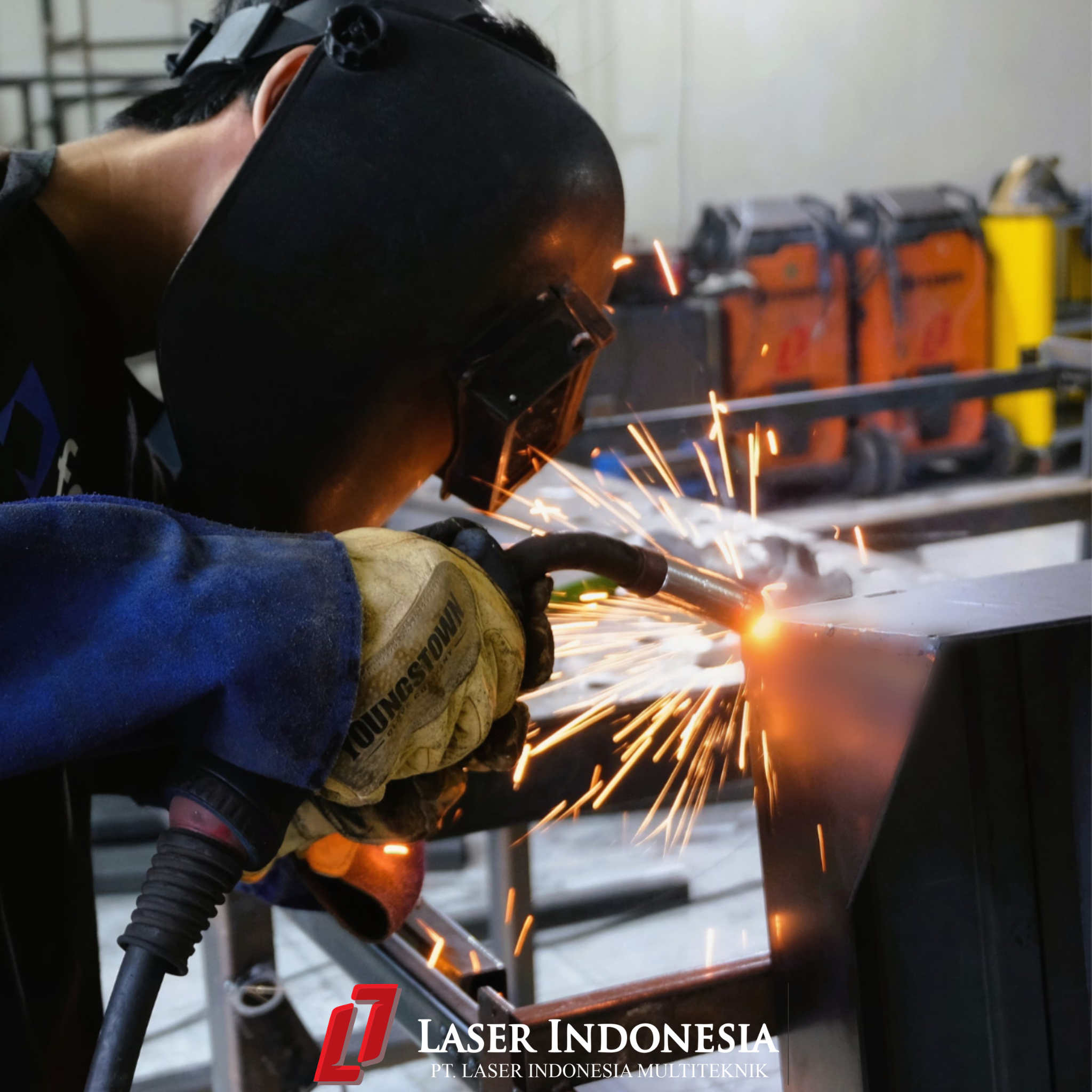
An efficient choice for larger production volumes and medium-to-thick material. Good deposition rates with adequate parameter control across a range of materials, including aluminium in pulsed mode.
Robotic MIG Welding — 2× Fronius TPS i400 on KUKA Robots
Both Fronius TPS i400 units are integrated with KUKA robots for robotic welding of aluminium and steel. Pulsed MIG mode enables aluminium welding with controlled heat input and a stable arc. For repeat production requiring consistent results across units, this system provides reliable, repeatable output.
Our robotic systems are not static — we continuously develop and refine them as project requirements and materials demand. Each development is documented and incorporated into the applicable operating procedures.
Welder Certification and Qualification
Most of our welders hold dual certification: a BNSP Sertifikat Kompetensi from Indonesia's Professional Certification Authority for Welding, and a MIGAS qualification issued by the Directorate General of Oil and Gas. Both are not administrative formalities — both require independent technical testing to obtain.
Our MIGAS qualification process is conducted at our workshop with a government MIGAS Inspector physically present, referencing ASME Sec.IX:2023. Each welder is tested across three stages: visual inspection, non-destructive testing (NDT), and destructive testing (DT) — including Macro Examination and Fillet Break Test, carried out by an independent testing laboratory. Our welding procedures are documented in formally qualified WPS and PQR records aligned to the applicable standard.
For projects requiring written welding procedure documentation, we can provide the relevant WPS as part of the project package.
Repair Work
A significant portion of the work that comes into our workshop is not new fabrication — it is components that need to be returned to service. Repair work we handle includes:
- Crack repair on structural and machine components
- Material build-up on worn or eroded surfaces
- Repair of joints that have failed or do not meet specification
- Reconstruction of areas damaged by operational loading or impact
Our approach to every repair begins with understanding the cause of the damage — not simply closing the visible defect. Proper repair requires an understanding of the material, the operating conditions, and the failure mechanism involved.
Laser Welding — A Separate Capability with Different Characteristics
Laser welding is not a replacement for conventional welding — it is a different process with different advantages. The extremely narrow heat-affected zone, high travel speed, and near-zero distortion make laser welding the right choice for specific applications that conventional arc processes cannot address.
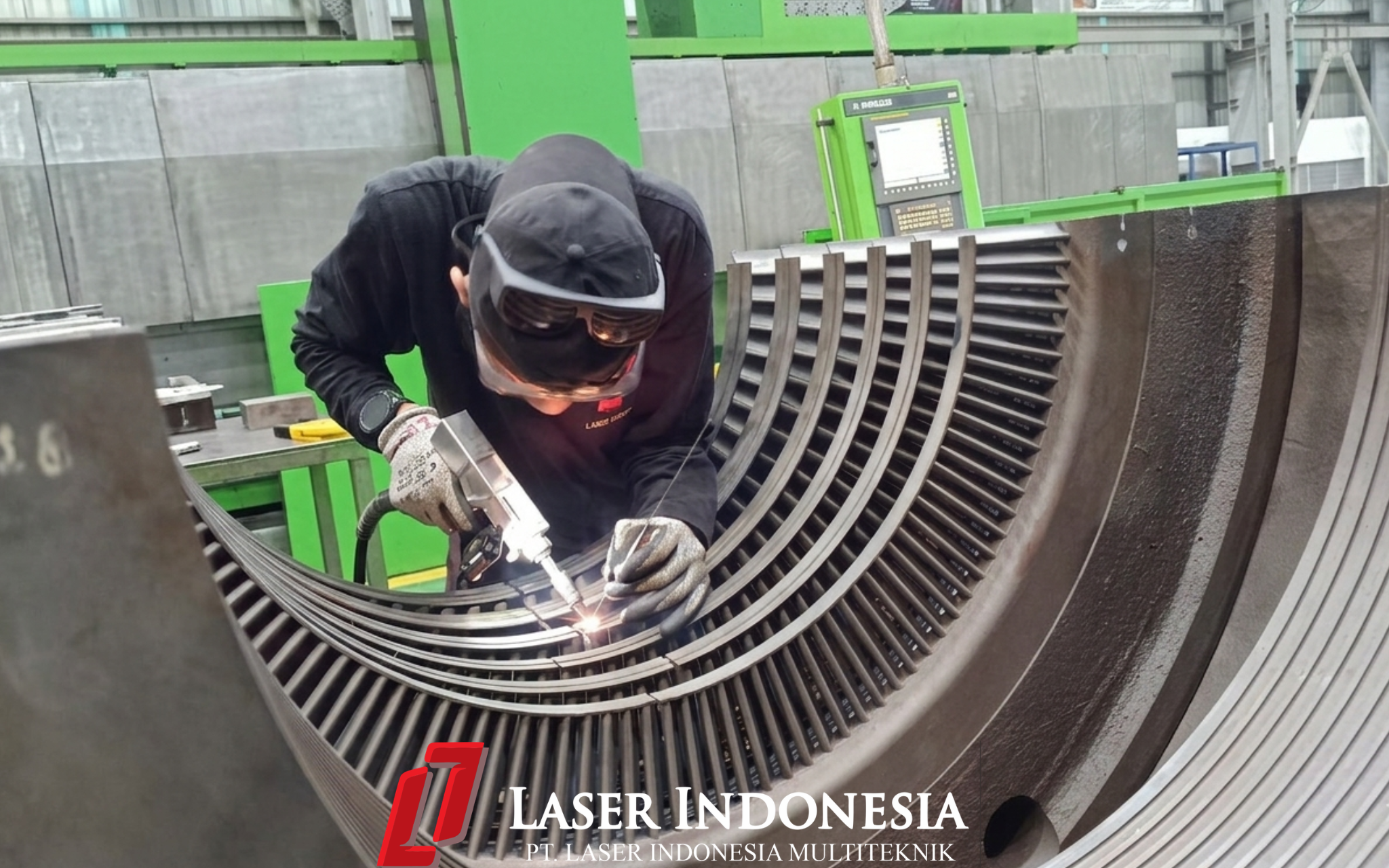
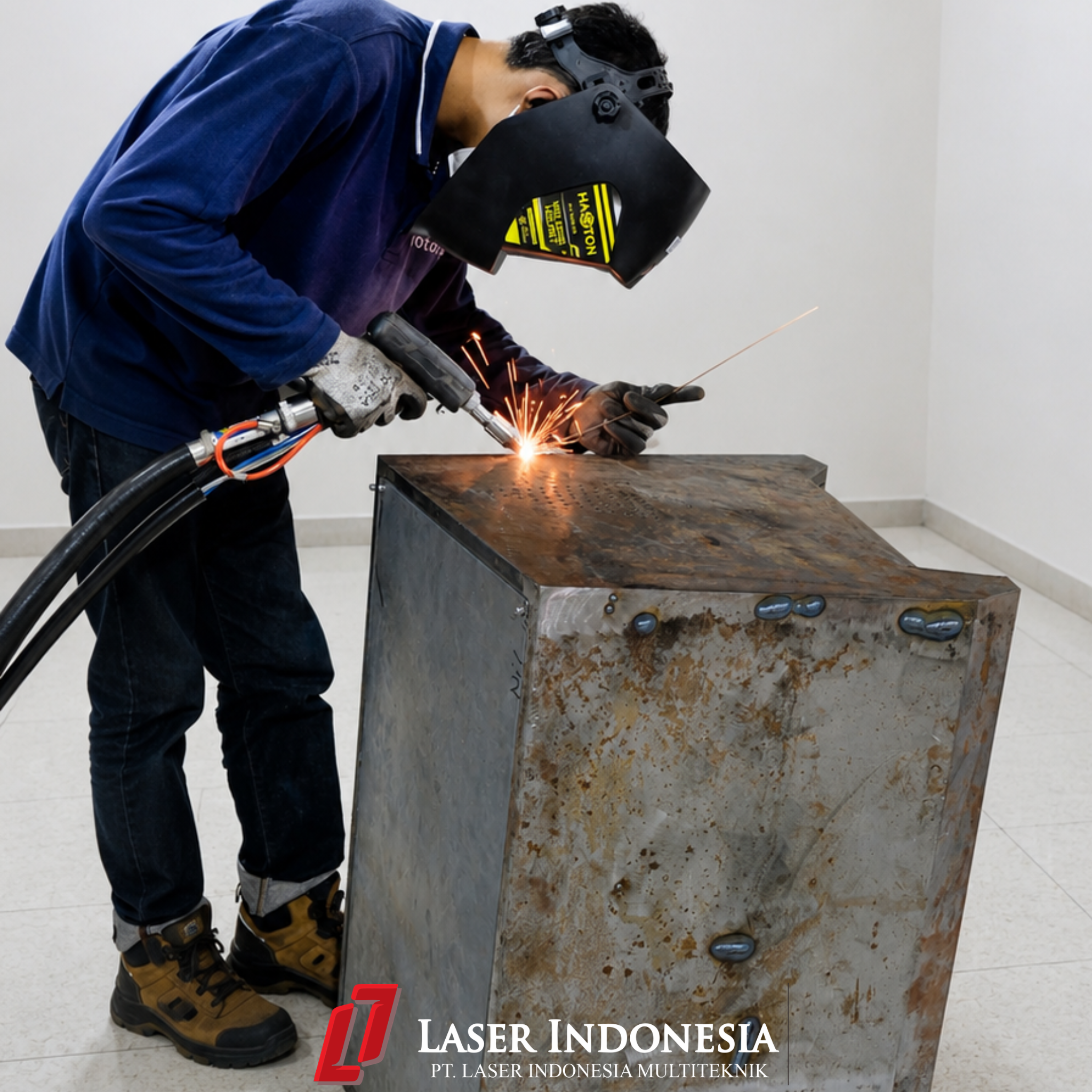
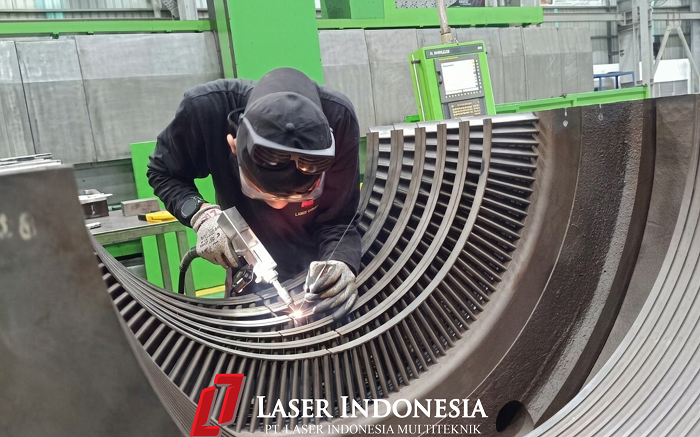
Handheld Laser Welding — 12 Units @ 1500W
Twelve handheld laser welding units at 1500W provide substantial capacity for manual laser welding work. Well-suited to high-quality thin material, components with tight dimensional tolerances, or work areas that conventional equipment cannot reach. With 12 units available, we can handle large volumes in parallel or deploy teams to multiple locations simultaneously.
Robotic Laser Welding — 2× 2000W on KUKA Robots
Two 2000W laser welding units integrated with KUKA robots for components with complex geometries and tight tolerances. Robotic repeatability ensures every weld pass is identical — not achievable manually for series production.
Pulsed Micro Laser Welding — Coherent EVO Mobile 200W QCW
For precision work requiring very small, controlled energy input, we use the Coherent EVO Mobile system with a 200W QCW (Quasi-Continuous Wave) laser source. The system operates in pulsed mode with peak pulse power up to 3kW, pulse duration of 0.1–50ms, and adjustable pulse frequency — giving very precise control over the energy deposited at each weld point. The result is joints in very confined areas with minimal heat transfer to surrounding material, appropriate for fine components, tooling, and applications where even minor deformation is not acceptable.
Tool Steel Mould Repair — SKD61, SKD11, SS136
Mould repair using laser welding is among the most demanding precision applications we handle. Tool steel moulds in SKD61, SKD11, and SS136 that have experienced wear, cracking, or surface defects on active faces require material addition that is both highly precise and thermally controlled — without distortion that could alter mould geometry.
Using the Coherent EVO Mobile system, we can deposit material in very specific areas with tightly controlled heat input. The result is a mould returned to its original dimensions with a surface that can be finished to the required roughness specification. The cost of mould repair by this method is generally substantially lower than producing a replacement mould.
On-site Across Indonesia
Not all work can be brought to our workshop in Cimahi. For on-site work — repairs in place, welding of large components that cannot practically be moved, or installation at height — our team is able to travel to site. We have completed on-site projects across multiple provinces, including Java, Sumatra, Kalimantan, and Papua.
Technical Consultation
Every welding job has its own considerations. We recommend a technical discussion before quoting — to understand the material, existing condition, applicable standards, and the expected outcome. From there we can recommend the most appropriate approach and prepare a quotation within 1 working day for work with clear specifications.
Technical consultation is provided at no charge.
📞 WhatsApp: 0811-9-52737
✉️ Email: info@laserindonesia.com
📍 Jl. H. Amir Machmud No. 539, Cimahi
Empowering Indonesia through laser technology.